Venture Studio
Apollo° builds focused ventures from founder insight, product discipline, and operating systems. Movely and Nod are the first public examples of that studio method in motion.
Apollo° studio method
Insight → product system → venture evidence
The studio is where Apollo° applies its founder operating system to products it can build, test, and improve directly.
Studio thesis
Apollo° turns repeated friction into focused products.
The studio does not begin with a pitch deck. It begins with a sharp problem, a narrow user, and a product system that can be built, tested, and improved without theatrical complexity.
Founder insight becomes a practical product question.
The first product surface stays intentionally narrow.
Operational clarity is designed before scale is pursued.
Each venture creates learning that improves the next one.
First ventures
Built as proof, not decoration.
Movely and Nod are early venture surfaces. Each starts with a specific behaviour and a product path that can earn sharper evidence over time.
Movely
Home selling / buying / move planning
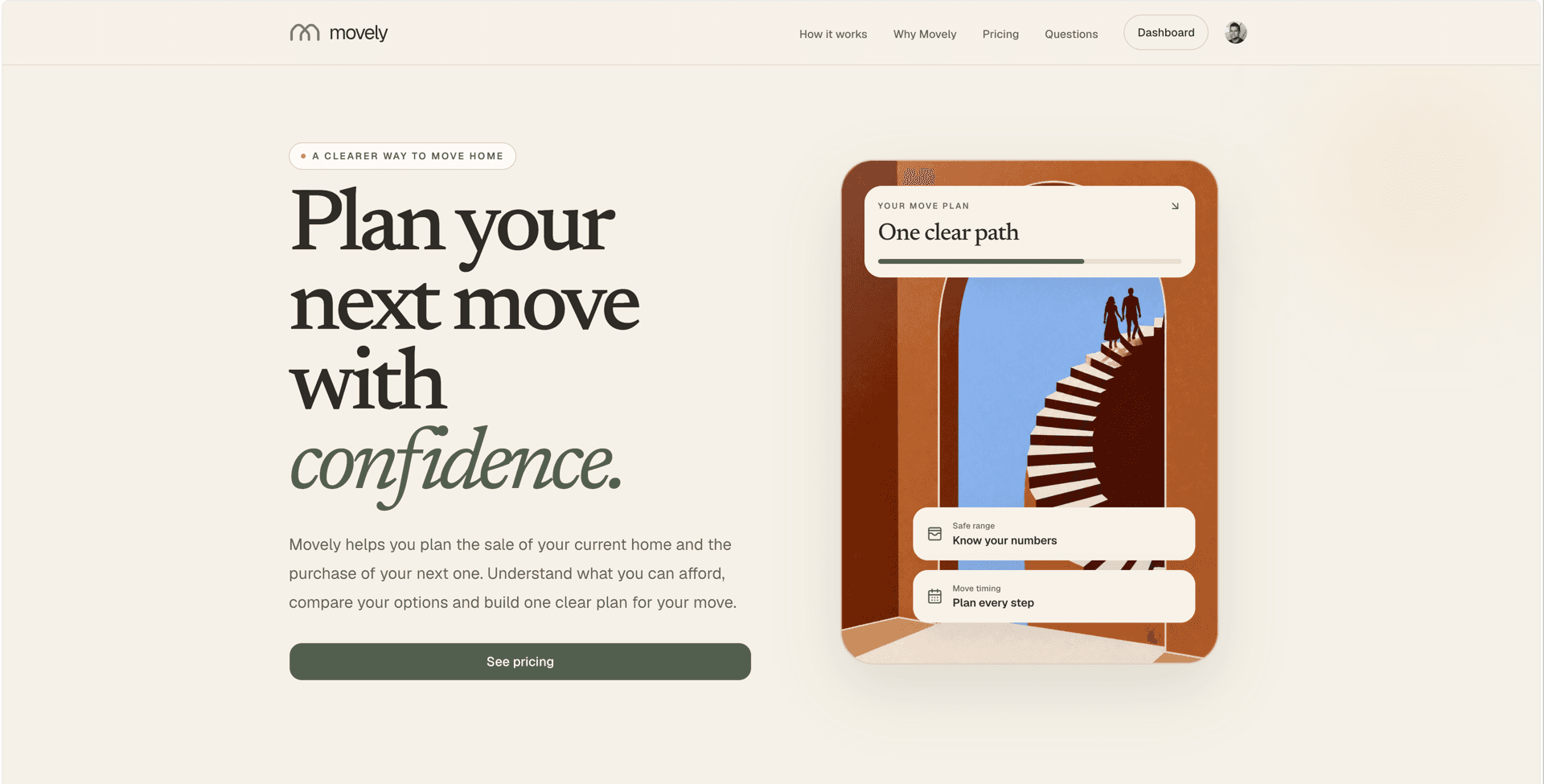
A clearer way for Australian homeowners to plan selling, buying, and moving home.
A move-planning product that brings affordability, timing, scenarios, and next steps into one clear plan.
Product question
How can homeowners understand what they can safely afford before making the commitments that shape their next move?
Who it helps
Homeowners planning the sale of their current home and the purchase of their next one.
Problem
Moving home creates a chain of connected decisions around sale price, mortgage, usable equity, purchase budget, settlement timing, moving costs, and cash buffer.
What it does
Movely brings affordability, timing, scenarios, and next steps into one clear move plan, helping people compare sell-first, buy-first, bridging, and rent-between options.
Why it matters
It gives homeowners clarity before they make big commitments, so they can understand what they can safely afford and choose a path with more confidence.
Founder note
Movely is being shaped around a question Australian homeowners often ask before making their next move: ‘What can we really afford before we list our current home?’
Nod
Bedtime stories / calm listening
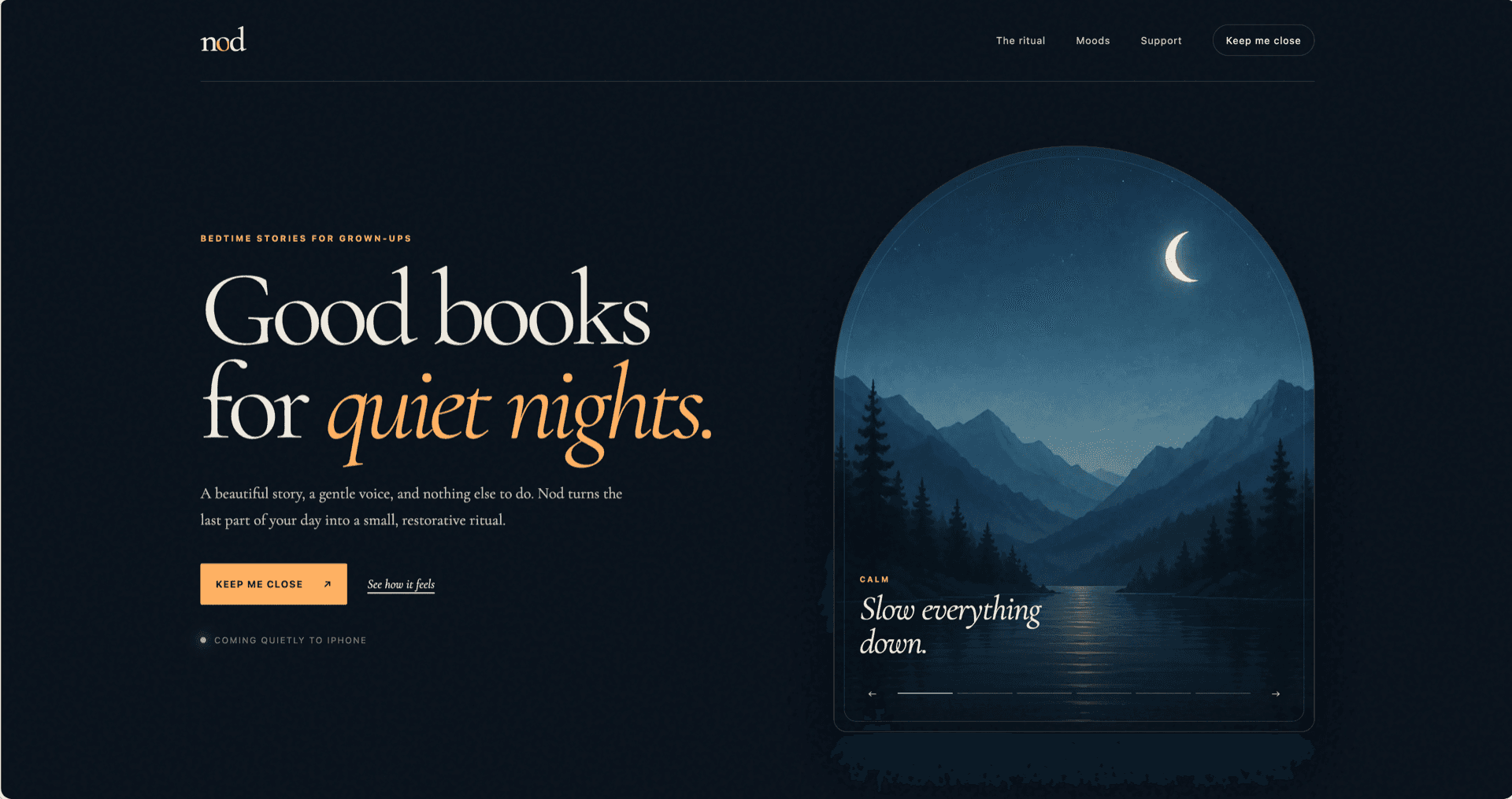
Bedtime stories for grown-ups.
A quiet listening product for ending the day with enduring books, gentle narration, and less digital noise.
Product question
How can bedtime become quieter, warmer, and less captured by feeds, metrics, and always-on content?
Who it helps
Adults who want a calmer way to wind down at night.
Problem
Bedtime has become too noisy: endless feeds, sleep metrics, and content that keeps the mind switched on.
What it does
Nod pairs enduring books with gentle narration, mood-based discovery, natural pause timers, and remembered stopping points.
Why it matters
It helps people end the day with story, stillness, and a little more ease.
Founder note
Nod began with a simple feeling: grown-ups still need bedtime stories. A good book, a gentle voice, and nothing else to do.
Operating model
A venture is built like a system.
Apollo° uses the same discipline behind Mission Control: clarify the constraint, choose the wedge, build a focused system, then learn from real behaviour.
Read Mission Control01 / Studio step
Find the constraint
Start with the repeated friction, not a broad market category.
02 / Studio step
Shape the wedge
Define the first user, first job, first proof point, and what will be deliberately ignored.
03 / Studio step
Build the product system
Turn the wedge into a small product with clear state, handoffs, and user action.
04 / Studio step
Launch and compound
Use evidence from real usage to improve the product, operating model, and next venture decision.
Studio collaboration
Bring the constraint. Apollo° will help shape the system.
Use Apollo° when a product idea needs sharper definition, a calmer operating model, or a practical path from concept to first evidence.
Start a studio conversation